
Rethinking Treatment Pathways for Pediatric Brain Diseases
by Sarah Kasleder for SHRF

For families facing pediatric brain diseases, time is often the most critical factor.
Some conditions progress slowly. Others do not. In the most severe cases, early symptoms can signal rapid and irreversible damage to the brain, leaving clinicians with a narrow window to act.
Dr. Tyler Wenzel’s research program focuses on expanding the window of opportunity and improving care delivery for children diagnosed with neurological conditions. One of them is X-linked adrenoleukodystrophy (X-ALD), a rare genetic disorder that affects the brain and spinal cord and can progress rapidly in childhood.
“Adrenoleukodystrophy can look very different depending on the patient. Some individuals may not develop symptoms until adulthood. But there is a severe form where the brain deteriorates very quickly. Within one to two months of the first symptom, a child can enter into a coma,” Dr. Wenzel explains.
That variability is part of what makes X-ALD so challenging to treat. Once damage occurs in the brain or spinal cord, it is often irreversible.
“Unlike skin or other tissues, the central nervous system has very little ability to heal itself. When neurons are lost, the function associated with them may be lost permanently,” Dr. Wenzel says.
This work is the focus of Dr. Wenzel’s 2025-26 Establishment Grant project, “Developing a New Technique to Cure Brain Diseases with Limited or No Safe Treatment Options,” which will be recognized with a Saskatchewan Health Research Foundation (SHRF) Excellence Award at the 2026 Santé Awards as the top project in the Biomedical category.
The limits of current treatments
Today, the only established treatment capable of stopping the most aggressive forms of X-ALD is a bone marrow transplant. While effective in some cases, the procedure carries significant risks and sometimes long-term consequences.
“Bone marrow transplants require chemotherapy or radiation beforehand. That essentially destroys the immune system. Patients then need lifelong immunosuppressants, which increases the risk of infections and other health complications later in life”, Dr. Wenzel explains.
For families in Saskatchewan, access adds another layer of complexity. These procedures are not performed in the province, requiring children and caregivers to be away from home for a minimum of three months.
“You’re living out of a hotel while worrying about whether your child will be okay. It’s a tremendous emotional and logistical burden for families,” Dr. Wenzel says.
A different approach, starting with the brain’s immune cells
“Bone marrow transplants work because immune cells can eventually migrate into the brain and replace dysfunctional microglia,” he says
Dr. Wenzel’s research explores a safer and more accessible alternative by focusing on microglia, the brain’s immune cells.
“Microglia are the brain’s immune system, and they can do the same things as the immune cells from bone marrow transplants,” he explains, “The challenge with bone marrow transplants is that the process can take up to a year, which may be too long for rapidly progressing diseases.”
“We’re trying to skip that waiting period. Instead of relying on cells slowly migrating into the brain, we’re testing ways to deliver healthy microglia directly where they’re needed,” Dr. Wenzel explains.
His team is evaluating two approaches: direct cell delivery into the brain and a less invasive option that delivers cells to the brain through the nasal cavity.
“The idea is to get therapeutic cells into the brain more quickly, without exposing patients to the risks that come with chemotherapy, radiation, or major surgery,” he says, “If this can be administered using existing clinical pathways, it becomes far more accessible for families and healthcare systems.”
Testing treatments in human-based models
To evaluate these approaches, Dr. Wenzel’s team is using human brain organoids, three-dimensional model cultures grown from human stem cells that replicate and model key features of the developing brain.
“Animal models are essential, but they don’t always reflect how a disease behaves in humans. With brain organoids, we can introduce the exact genetic mutation seen in patients and observe how the disease develops in a human system,” says Dr. Wenzel.
By introducing healthy microglia into these models, the team can assess whether key disease features begin to change, providing early insight into whether the approach could translate to humans.
“This helps us narrow down which strategies are worth pursuing before moving toward clinical studies,” he adds.
Building research with patients, clinicians, and the community
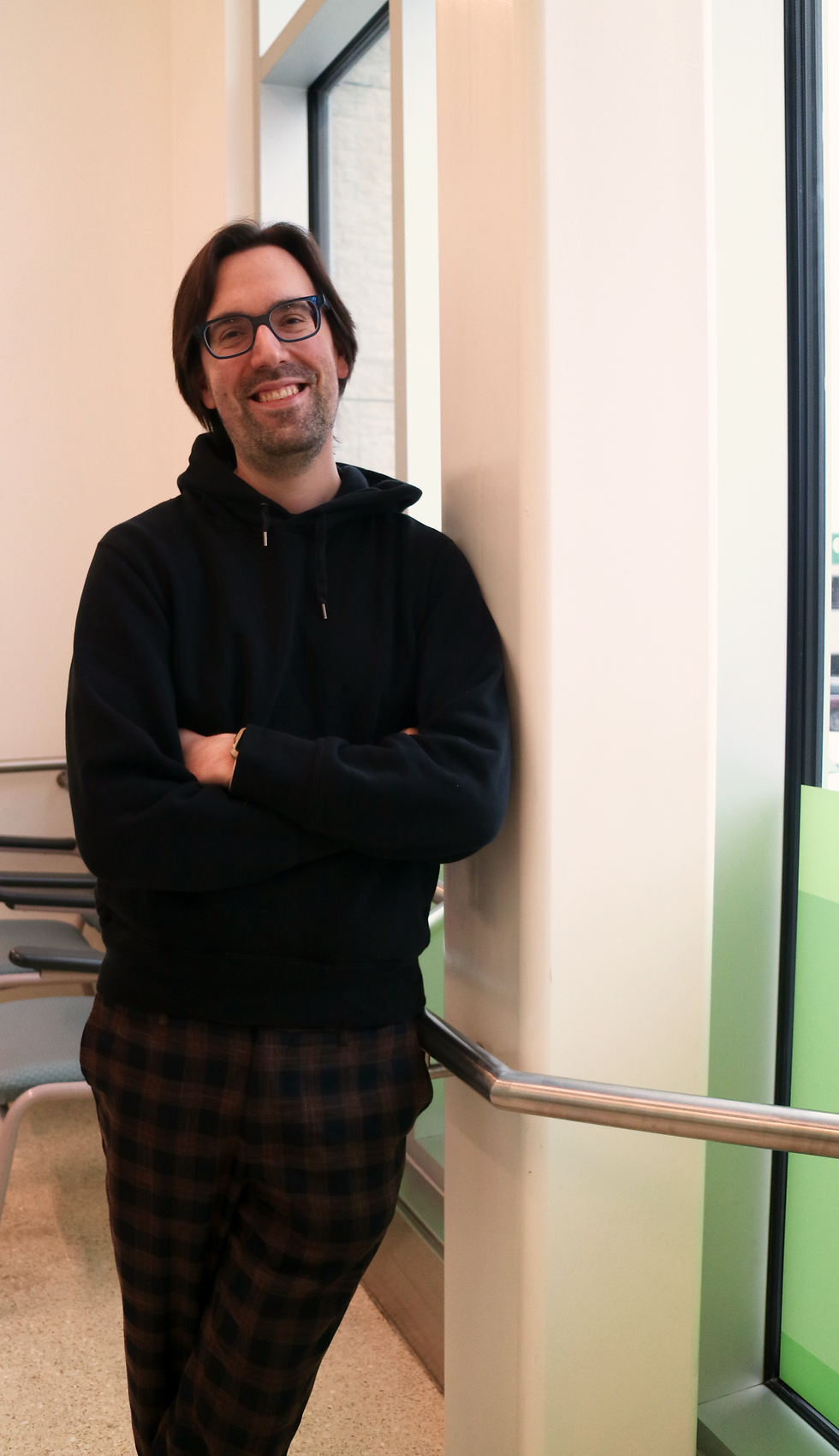
Dr. Wenzel is intentional about how the research is shaped beyond the lab.
“We’re not doing this in isolation,” he says, “Patients and families bring perspectives that researchers and clinicians simply don’t have on their own.”
Dr. Wenzel’s team is involving children and their families early in the research. With help from Ally Farrell (Patient Partner Navigator), they’re building a safe, age‑appropriate way for families to take part in studies through the new Patient and Family Partner Program in the Department of Pediatrics—the first program of its kind in Saskatchewan.
“That kind of involvement makes the work better, and it keeps us focused on what actually matters to families,” Dr. Wenzel says.
He also works closely with Saskatchewan-based clinicians, including metabolic specialists (Dr. Spencer Zwarych), pediatric endocrinologists (Dr. Mark Inman), and neurosurgeons (Dr. Michael Kelly), so the research aligns with current care pathways and future clinical realities.
Dr. Wenzel’s work shows how important it is for scientists and doctors to work closely together so that new discoveries made in the lab can be turned into real treatments that help patients.
“Having clinicians involved early changes how you design the science. You’re not just asking whether something works in theory, but whether it could realistically be used in practice,” Dr. Wenzel explains.
Building toward long-term impact
“Although X-ALD is rare, the broader approach we’re developing could be relevant for a range of pediatric neurological conditions currently treated with bone marrow transplants,” Dr. Wenzel says.
“If we can show it works for X-ALD, confirming it in other diseases becomes much more straightforward,” he adds.
Ultimately, his vision is about improving both outcomes and quality of life for children and families.
“My motivation is simple,” Dr. Wenzel says, “I want to make kids healthier. I want families to have more certainty and less stress. And I want treatments that work without creating lifelong complications.”
Making the work possible
Support from SHRF has played an important role in launching this research program.
“This work would not have been possible without SHRF. The funding allowed us to bring clinicians, scientists, and patient partners together and move an idea we’ve been working toward for years into action,” Dr. Wenzel says.
As the research progresses, Dr. Wenzel and his team are committed to sharing findings with clinicians, researchers, and families, with the long-term goal of ensuring children can receive timely, effective care closer to home.
“We’re trying to build something that lasts,” he says, “Something that changes what’s possible for the next generation of kids.”


Comments