
How Listening and Building Trust Sparked Change for Saskatchewan Farmers and Ranchers' Mental Health
by Sarah Kasleder for SHRF

What mental health supports do Saskatchewan farmers and ranchers need?
For Dr. Michelle Pavloff, that question sparked a research journey that continues today.
At the time, Dr. Pavloff was an early-career researcher completing her PhD. She had an interest in rural and agricultural mental health, shaped by her personal life and by what she heard from farmers and ranchers across Saskatchewan.
“There was growing awareness that mental health challenges existed in agriculture, but there was still very little Canadian research focused specifically on producers’ experiences or what supports would actually work for them,” said Dr. Pavloff.
With support from a SHRF Sprout Grant, co-funded by Saskatchewan Centre for Patient-Oriented Research (SCPOR), Dr. Pavloff began exploring that question.
Today, that question has evolved into an ongoing program of research, the SaskAgMatters Mental Health Network, and a growing network of partnerships, services, and supports for farmers and ranchers across Saskatchewan.
Before there was research, there was trust
When Dr. Michelle Pavloff first began exploring mental health in Saskatchewan’s agricultural community, she thought the answers would come through traditional research methods.
Instead, she quickly discovered something important.
Trust had to come first.
At first, the goal was to better understand those experiences. But meaningful conversations about mental health were not going to happen through a survey.
Farmers and ranchers wanted to know who was asking the questions, why, and whether their experiences would truly be heard, understood, and respected.
Rather than expecting people to come to her, Dr. Pavloff spent time in agricultural communities, attending events, meeting producers where they already gathered, and having one-on-one conversations.
Many of those conversations took place around tables, over meals, and in places where relationships could develop naturally.
“In the beginning, success honestly looked fairly simple. I wanted producers to feel heard and represented in the research process,” explained Dr. Pavloff.
Over time, those conversations became relationships, and those relationships became trusted ones, opening the door to honest discussions about the realities producers were facing.
“The original question was really centred on understanding what farmers and ranchers actually needed in terms of mental health support and why existing systems were often not working well for agricultural communities,” said Dr. Pavloff.
Many felt that existing mental health supports did not reflect the realities of agricultural life.
From Listening to Action

As trust grew, so did the work.
“I don’t think I fully imagined how much the work would grow,” said Dr. Pavloff. “Initially, the focus was on understanding the needs and gaps in mental health supports for agricultural producers.”
“What became clear very quickly was that communities did not just want research describing the problem; they wanted action, collaboration, and solutions.”
That realization shaped the next phase of the work.
As conversations continued, new opportunities emerged. Producers, researchers, community members, and organizations began collaborating to identify solutions and create change.
The work evolved through several SHRF funding opportunities, including Sprout, Establishment, Align, and Mobilize grants. Each stage played a distinct role in advancing the work and supporting the agricultural community.
“The Sprout Grant helped us begin listening and understanding community priorities. The Establishment Grant helped build the FARMh research program and create stronger infrastructure and partnerships around agricultural mental health research.”
“The Align and Mobilize funding opportunities were especially important because they helped move research findings into communities and supported knowledge translation, partnerships, and accessible supports.”
The Establishment Grant marked a particularly important turning point.
“It allowed the work to move beyond the individual FARMh project into a broader program of research. The most important thing was that it created capacity for the work to continue to evolve based on community priorities instead of ending after a single study,” explained Dr. Pavloff.
Research Shaped by Relationships
One of the things that made the work different was that farmers and ranchers were not simply participants in the research but helped shape it.
“Having patient family partner voices involved changed the work in a way I never would have imagined,” said Dr. Pavloff.
“It helped ensure the research questions, priorities, and outcomes reflected what Saskatchewan farmers actually needed instead of assumptions that we could have brought in as a research team.”
Their involvement challenged researchers to rethink trust, communication, cultural accessibility, and knowledge mobilization. “So many of the most impactful ideas and initiatives came right from conversations with our patient family partners.”
As relationships deepened, partnerships followed.
Researchers, producers, health-care providers, agricultural organizations, government partners, and community leaders all became part of the journey and the research.
“Partnerships have really been foundational to everything we have done,” explained Dr. Pavloff.
“Most importantly, the relationships with Saskatchewan producers continually shaped the direction of the research and ensured the work stayed grounded in real-world needs and experiences.”
“What I find so remarkable is how each partnership seemed to create momentum for the next. As trust, relationships, and collaboration developed, the work really expanded into new opportunities.”
Creating Impact Beyond Research
What began as conversations and relationship-building eventually grew into something much larger.
“One of the things I am most proud of is seeing research findings translated into supports and initiatives that communities can actually access and use,” she said.
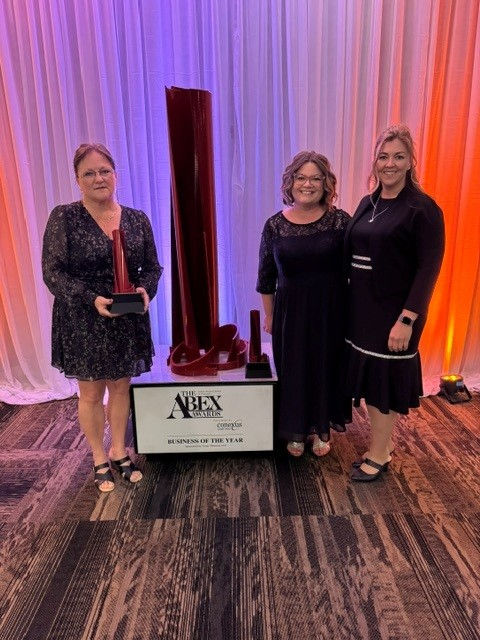
These supports include the creation of the SaskAgMatters Mental Health Network Inc, which provides free therapy services for Saskatchewan farmers, agricultural workers, and their families.
The work has also contributed to provincial and national partnerships, including the management of the Saskatchewan Farm Stress Line and collaboration with the Canadian Centre for Agricultural Wellbeings National Farmer Crisis Line.
For Dr. Pavloff, the most meaningful impacts are often the personal ones.
“I think the most meaningful moments are often hearing producers say that they felt heard, understood, or less alone,” she said. “Some have said this has saved their life.”
Those moments continue to drive the work forward.
Today, FARMh 2.0 is underway, with efforts focused on evaluating existing programming, expanding partnerships, and developing new supports, including SaskAgBuddy, an app being developed with Bridges Health.
Looking back, Dr. Pavloff sees SHRF’s support as an important catalyst.
“SHRF’s support played a significant role in helping this work grow from early-stage ideas and questions into an ongoing program of research and community initiatives,” she said.
“The funding provided resources, credibility, momentum, and opportunities to build partnerships and collaborations.”
What began as a question about the mental health needs of Saskatchewan farmers and ranchers has evolved into a program of research, partnerships, services, and supports that continue to make a difference in agricultural communities.
Along the way, SHRF funding supported the work through multiple stages of its evolution, which has now impacted countless Saskatchewan farmers' and ranchers' lives and is expanding to impact Canadian lives.


Comments