
$2.7 Million Invested to Advance Health Research Solutions in Saskatchewan
Updated: Apr 17
Research leads to better health care, healthier communities and brighter futures.

Saskatchewan Health Research Foundation (SHRF), Brain Canada, Jim Pattison Children’s Hospital Foundation (JPCHF), Alzheimer Society of Saskatchewan (ASOS) and Lung Saskatchewan are proud to share that we're investing $2.7 million in peer-reviewed, home-grown research solutions addressing Saskatchewan’s most urgent health challenges.
SHRF's Solutions Program aims to mobilize Saskatchewan's research ecosystem by focusing and coordinating diverse skills and perspectives to tackle pressing problems affecting our health. In this program, SHRF works closely with our partners to provide competitive, peer-reviewed research funding to interdisciplinary teams, including knowledge users and people with lived experience. Together, these teams develop and implement innovations that address real needs identified by stakeholders and fuel efforts to translate research knowledge into tangible benefits for people in Saskatchewan, and ultimately all Canadians.
Two types of grants are offered in the Solutions Program, ranging from $50K to $150K per team. These grants are designed to support teams at various stages of their research - from catalyzing creative problem-solving with innovative ideas to advancing promising research into practical, real-world applications.
This round of recipients features 23 projects from interdisciplinary research teams working with a variety of community organizations, healthcare providers and patients in the focus areas of:
$2.6 Million Invested in Brain Health
SHRF and Brain Canada collaborated to bring brain health to the forefront as the focus area for Solutions. Brain health is essential for physical health and a fundamental prerequisite for mental health and well-being throughout our lives. From promoting optimal brain development and cognitive health throughout the lifespan, to preventing, diagnosing, and treating numerous neurological conditions, research on brain health is an exciting frontier and holds great promise for solutions that will both improve lives and reduce the healthcare burden.
Partnerships with Jim Pattison Children's Hospital Foundation and Alzheimer Society of Saskatchewan provided additional funding for research addressing pediatric brain health and dementia. Together, and with additional support from Parkinson Canada and Lung Saskatchewan, SHRF and partners have invested in the following grants, covering a range of brain health topics and challenges, from diagnosis to treatment to community programming.
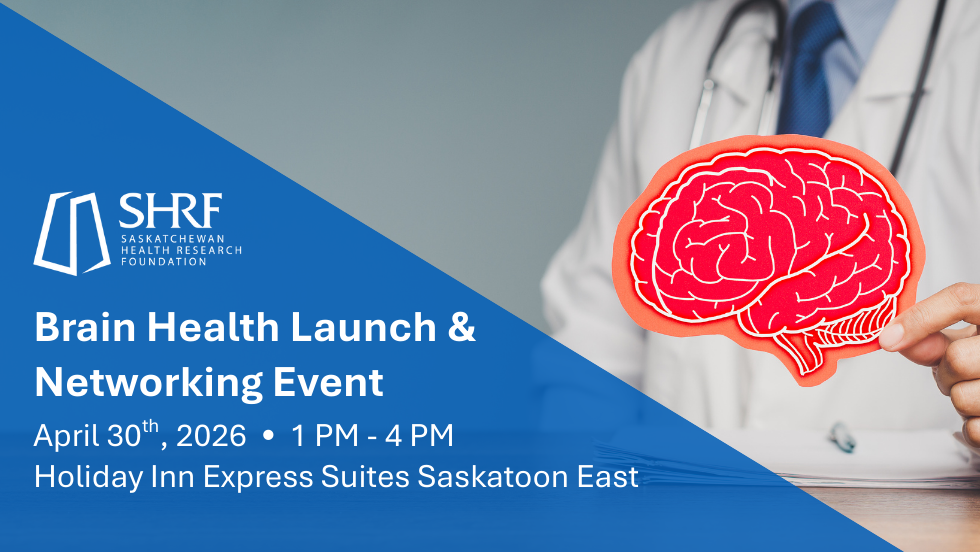
Looking to connect with others working in brain health?
Join us at the Solutions Brain Health Launch & Networking event on April 30th in Saskatoon. Connect with researchers, clinicians, knowledge users, and community partners working across the brain health spectrum.

$1 Million Invested with Brain Canada
The SHRF-Brain Canada Funded Projects:
A Clinical Blood Test to Identify Aggressive and Early-Onset Forms of Parkinson's Disease
Led by Christopher Phenix (University of Saskatchewan)
Impact Grant: $150,000
Read more about this project
Enzymes are proteins responsible for metabolism and chemical reactions required by all living cells. In some diseases, certain enzymes can dysfunction contributing to disease pathology. Patients who have serious forms of Parkinson's appear to have low levels of GCase, an enzyme that breaks down specific fats in all human cells.
This project aims to develop a diagnostic blood test that can accurately measure levels of GCase in blood samples of Parkinson's patients. If successful, this test could help identify patients with aggressive forms of Parkinson's and be used as a powerful tool to help guide the development of important new therapies designed to boost GCase activity to slow disease progression. This research, pioneered in Saskatchewan, could establish our province as a world leader towards the development of a simple blood test for Parkinson’s disease while also providing critical insight into the biological risk factors for developing early onset aggressive forms of Parkinson's disease.
Boosting the Brain's Ability to Adapt: Acute Intermittent Hypoxia in Later Stages of Multiple Sclerosis
Led by Sarah Donkers (University of Saskatchewan) and Katherine Knox (University of Saskatchewan)
Innovation Grant: $50,000
Read more about this project
Multiple Sclerosis (MS) is a disease that affects the brain and spinal cord, leading to loss of nerve function without a cure. Acute intermittent hypoxia is a non-invasive treatment that involves alternating episodes of breathing air with normal ambient oxygen with short periods of oxygen-reduced air. Recent research in Saskatchewan has discovered that acute intermittent hypoxia may help improve brain health in an animal model of MS. This same treatment has also shown benefits for some people living with spinal cord injuries. Scientists are now studying whether acute intermittent hypoxia can help people in the early stages of MS. However, no one has yet tested this approach in people in the later stages of MS who often have few treatment options.
Our study will be the first to explore acute intermittent hypoxia for brain health inclusive of people living with advanced MS.
Exercise and Rehabilitation in the Community for People Living with Chronic Neurological Conditions
Led by Cameron Mang (University of Regina)
Impact Grant: $150,000
Read more about this project
It is well-established that exercise and physical rehabilitation is beneficial for people with neurological conditions, even years after a diagnosis. But the barriers to participation in physical activity are high. Community programming may facilitate participation in physical activity, but after hospital discharge, there are few available services for people with neurological conditions.
This study will evaluate a real-world exercise and rehabilitation program for community-dwelling people with neurological conditions. We will focus on how effective the program is at improving movement abilities while also considering outcomes like: How many people are participating? What healthcare providers referred people? How much does it cost to deliver? Some research also suggests that exercise and rehabilitation can influence psychology and personality characteristics that are important to recovery, like resilience, hope, and self-efficacy. We will look to see if changes in ‘personal factors’ occur in our work. Findings will support delivery of high-quality community-based exercise and rehabilitation for broad impact, spanning physical function and personal well-being.
Exploring Hypothalamus Stimulation as a New Treatment for Drug-Resistant Epilepsy
Led by Justin Botterill (University of Saskatchewan), John Howland (University of Saskatchewan), Robert Laprairie (University of Saskatchewan) and Amit Persad (University of Saskatchewan)
Impact Grant: $150,000
Read more about this project
Epilepsy is a severe neurological disorder that affects approximately 300,000 Canadians. Anti-seizure medications are the main treatment strategy for patients with epilepsy, but 1 in every 3 patients experience drug-resistant epilepsy. Therefore, a major goal of our research is to identify new and effective treatment strategies for patients with drug-resistant epilepsy.
Preliminary data from our laboratory has found that a brain region known as the hypothalamus influences seizure frequency in mouse models of epilepsy. In the present study, we plan to test whether modifying the activity of the hypothalamus with low frequency stimulation procedures can reduce seizures in mice and human patients with drug-resistant epilepsy. This type of brain stimulation would offer a safe and effective method for reduction of seizure frequency. Our findings could lead to the discovery of new therapies for people living with drug-resistant epilepsy.
HELPing People with Chronic Pain and FASD Manage Their Health Using a Mobile App
Led by Holly Mansell (University of Saskatchewan)
Impact Grant: $150,000
Read more about this project
Managing chronic health conditions like chronic pain and Fetal Alcohol Spectrum Disorder (FASD) can be challenging, especially when support is limited. Tracking symptoms, adhering to treatment plans, and engaging in self-care strategies all play a role in self-management of these chronic conditions. Our team has developed a mobile app called HELP (Health Education and Learning Platform) to support people in managing their health.
Originally designed for transplant patients, HELP offers features like medication reminders, symptom tracking, educational resources, and communication tools to help users stay on top of their care. In this project, we will customize HELP for people living with chronic pain and FASD, working closely with healthcare providers and community organizations in Saskatchewan. We will test how easy and helpful the app is for patients and care teams in real-world settings. Our goal is to create a flexible, user-friendly tool that improves health and well-being by supporting self-management. Our hope is that this app can be further expanded to help people with other health conditions across the province and beyond.
Improving Mental Health Support for Northern Indigenous Communities Using a Culturally Grounded Mobile App
Led by Ivar Mendez (University of Saskatchewan & Virtual Health Hub), Scott Adams (University of Saskatchewan & Virtual Health Hub) and Veronica McKinney (University of Saskatchewan & Virtual Health Hub)
Impact Grant: $150,000
Read more about this project
Many people in northern and Indigenous communities in Saskatchewan face challenges in accessing mental health support due to distance, limited services, and long wait times. This project aims to work together with community members, Elders, youth, and local health workers to strengthen mental health support using a mobile app that offers daily check-ins, guided conversations, and the ability to connect with care providers remotely.
The app is designed to feel culturally safe, supportive, and respectful of local values.
The study will involve youth and adults in La Loche and Whitecap Dakota communities. Participants will try the app, share feedback on what works well, and help guide improvements. By learning directly from the community, this project will show whether this approach helps reduce stress, anxiety, and low mood, while improving continuity of care. The results may help create long-term, community-led digital mental health support across Saskatchewan.
Novel Drug Shows Promise in Reducing Disability in Multiple Sclerosis
Led by Michael Levin (University of Saskatchewan)
Impact Grant: $150,000
Read more about this project
Multiple sclerosis (MS) is a complex autoimmune disease of the central nervous system with a remarkably high prevalence in Canada, especially in Saskatchewan. Despite the development of disease modifying therapies that slow the progression of MS, the overall healthcare utilization by persons living with MS remains high. This is likely due to the fact that current therapies do not effectively address the underlying damage that happen to neurons in MS.
Our team discovered a protein called A1 that malfunctions in the nerve cells of people living with MS, causing nerve cell damage and long-term neurological disability.
Using cutting-edge technology, we invented a new medication that can prevent A1 malfunction and nerve cell damage in mouse nerve cells. This study will further test this novel medication in mice and in human nerve cells to understand how it works. This work is the final step needed before we can test our new treatment in clinical trials, with the ultimate goal of treating neurodegeneration, reducing disability and improving the lives of persons living with in MS.
Touch, Balance, and the Brain: A New Approach to Improving Balance and Preventing Falls
Led by Alison Oates (University of Saskatchewan) and Janeen Loehr (University of Saskatchewan)
Innovation Grant: $50,000
Read more about this project
This research explores how lightly touching another person, referred to as interpersonal light touch, can help people stay balanced while standing. Falls are a major health concern, especially for older adults and those with conditions like Parkinson’s disease. Previous studies show that lightly touching an object or another person adds sensory input to help improve balance.
The goal of this study is to understand how the brain processes the sensory input from interpersonal light touch to improve balance. We will test whether giving people different instructions, like working together or guiding each other, can make interpersonal light touch more helpful by measuring how much people sway while standing and recording brain activity using special equipment that tracks both partners at once. The proposed study starts with healthy adults with plans to later expand to those with balance challenges. Results could lead to better fall prevention strategies and rehabilitation programs, helping people stay active and independent.

The SHRF-Parkinson Canada Funded Project:
Development of Non-Invasive Diagnostic Tests for Parkinson’s Disease and Related Disorders
Led by Eric Noyes (University of Saskatchewan) and Haixia Zhang (University of Saskatchewan)
Innovation Grant: $50,000
Read more about this project
Parkinson’s disease is the second most common neurodegenerative disorder world-wide and affects over 110,000 Canadians. However, healthcare workers rely on clinical examination to diagnose Parkinson’s disease, with a definitive diagnosis being possible only through postmortem brain pathology. Diagnostic accuracy at the first clinical visit with a neurologist is only 75-80%, though reassessment after five years improves diagnostic accuracy to 97%. Unfortunately, this delay in achieving diagnostic certainty can significantly affect treatment decisions and prognostic counselling.
While different methods such as imaging, laboratory testing, and genetic testing may assist in evaluation, these methods are costly, invasive, and not widely available. Inspired by studies showing that trained dogs can identify Parkinson’s disease by scent, we propose a novel, non-invasive diagnostic approach using analysis of potential scent-causing volatile organic compounds found in earwax and skin oil. We will employ advanced analytical techniques to identify disease-specific volatile organic compound patterns that could improve early diagnostic accuracy and guide early therapy selection.
$900k Invested in Pediatric Brain Health

In partnership with Jim Pattison Children's Hospital Foundation, we are committed to the enhancement of maternal and children’s healthcare in Saskatchewan and Jim Pattison Children’s Hospital.
The following grants have been funded in partnership with Jim Pattison Children's Hospital Foundation to support the development of healthy brains.
The SHRF-JPCHF Funded Projects:
Detecting Hidden Awareness in Children with Serious Brain Injuries Using Advanced Brain Imaging
Led by Gregory Hansen (Saskatchewan Health Authority) and Rishi Ganesan (Western University)
Impact Grant: $124,350
Read more about this project
Each year, many children in Saskatchewan suffer serious brain injuries that can lead to coma, a state where they cannot respond, making it hard for doctors to know if the child is truly aware. Current medical tests often miss signs of hidden consciousness, making recovery predictions difficult. This study will use advanced brain scan called functional MRI to check if the child’s brain is still active, even if they can’t move or speak.
Recent evidence shows that 1 out of 5 adults in a coma demonstrate evidence of hidden consciousness on a functional MRI in response to verbal commands, but this has not been tested in children. By following children admitted to the ICU with new brain injuries at the Jim Pattison Children’s Hospital, researchers hope to find new ways to detect hidden awareness and improve predictions about recovery. Families will fill out surveys three and six months after injury to see if and how brain scan findings are related to patient outcomes. This research could improve care for brain-injured children in Saskatchewan, helping doctors and families make better informed decisions about treatment.
Exploring the Effects of a Novel Wistar Rat Model of Early Life Adversity on Behaviour and Brain Health
Led by Wendie Marks (University of Saskatchewan)
Innovation Grant: $50,000
Read more about this project
Early life adversity refers to severe, chronic stressors in childhood and is associated with mental health problems in adolescents and adults. Understanding the effects and mechanisms of early life adversity on brain health is a critical area for research. Early life adversity can be studied using animal models, but the causes of early life adversity are often multidimensional, resulting in more than one adverse environmental exposure, such as stressful environments and unavailability of nutritional foods. Most animal models of early life adversity are focused on the effects of a single adverse exposure.
We aim to improve the generalizability of animal models of early life adversity by investigating the combined effects of two commonly used single exposure models, maternal separation stress and maternal protein restriction during lactation. This multidimensional two-hit model will hopefully be more clinically relevant for studying the effects of complex early life adversity on brain health observed in clinical populations.
Improving Brain Health Through Increase in Childhood Vaccination Coverage Rates Among Northern Saskatchewan First Nation Communities
Led by Nnamdi Ndubuka (University of Saskatchewan) and Shirley Woods (Prince Albert Grand Council)
Innovation Grant: $50,000
Read more about this project
Some First Nation communities in northern Saskatchewan have achieved high childhood immunization coverage rates for children 2 years and younger, but other communities have lower rates below the 95% target recommended by the Saskatchewan Ministry of Health. Low immunization rates puts children at risk of developing infections such as encephalitis and meningitis, which can lead to hearing loss and other complications known to impair neurodevelopment.
Our project aims to protect the developing brains of First Nations children by co-designing a culturally grounded, community-led strategy to improve routine immunization uptake among children aged 0 to 2 years in northern Saskatchewan. We will collaborate with First Nation community members, Elders, front line healthcare workers and Indigenous patient partners with lived experience in childhood immunization in the planning and implementation of the study. Our end goal is to make recommendations on how to improve immunization coverage in the communities.
Improving Detection of Vision Difficulties in Children with Early Life Brain Injuries
Led by Meghan Maiani (University of Saskatchewan) and Juan Appendino (University of Saskatchewan)
Impact Grant: $150,000
Read more about this project
This study will create and test a new team-based protocol to identify brain-based vision problems in children known as cerebral visual impairment. Many children born with neurological and neurodevelopmental challenges can have vision difficulties, and these can be difficult to detect. By bringing together specialists from neurology, pediatrics, ophthalmology, occupational therapy, and physiotherapy, the research team will design a more accurate and practical way to recognize cerebral visual impairment before children reach school-age.
This project will explore how well this approach works for families and healthcare providers, including those in rural, remote, and Indigenous communities. Using brain scans, eye tests, and assessments of visual function, researchers will evaluate the newly developed process and gather feedback through interviews with families and healthcare providers. The goal is to create a standard, province-wide protocol that ensures earlier detection and better support for children with cerebral visual impairment.
Pediatric Heart Disease and Autism Spectrum Disorder May Share a Common Molecular Trigger
Led by Darrell Mousseau (University of Saskatchewan) and Michelle Collins (University of Saskatchewan)
Innovation Grant: $50,000
Read more about this project
Children with congenital heart disease are 3-6 times more likely to also be diagnosed with autism spectrum disorder, yet little is known as to why these diseases can occur together. While studying a mouse model that carries a protein associated with autism spectrum disorder, our research team observed some significant changes in their heart function. We propose to further study how this protein affects heart function using a zebrafish model. Zebrafish models are valuable for studying both heart development and behavioural patterns, which allows study of the protein's function in both congenital heart disease and autism.
This study will enhance our understanding of the underlying and shared mechanisms for both diseases, and will improve our understanding of the unique cardiovascular health needs of children with autism spectrum disorder.
The Baby Bridge Project: Helping Families Access Early Support for Child Development and Well-being
Led by Ghita Wiebe (University of Saskatchewan) and Daniel Adeyinka (Saskatchewan Health Authority)
Impact Grant: $149,768
Read more about this project
The Saskatchewan Health Authority Baby Bridge Project launched in 2025 to reach infants and young children who lacked regular primary care and needed community medical and developmental follow-up, but families are facing early and preventable barriers to well-being and more still needs to be done. Working alongside parents and caregivers, the project will bring community primary care services and specialists like pediatricians together in one medical home model so families can get help earlier and closer to home.
A simple screening and triage tool will guide families to the right supports more quickly, cutting long wait times in half. Families and clinicians will help design, test, and improve this model to make sure it meets real community needs. By looking at how well this works and how it can be continued in the future, the project will build evidence for a more inclusive and coordinated system of care. This project aims to give children a stronger, healthier start in life and will set an example to improve early childhood services across the province.
The Impact of Maternal Folic Acid vs Methyl Folate Supplementation on Breastmilk Composition and Infant Neurodevelopment
Led by Kelsey Cochrane (University of Saskatchewan)
Impact Grant: $150,000
Read more about this project
Folate, a B vitamin, is recommended for daily supplementation in the form of folic acid while breastfeeding to support the baby's neurodevelopment and the mother's health. However, our bodies are only able to process small amounts of folic acid into folate, which could result in some unused folic acid in breast milk, which may actually interfere with folate-related metabolism. “Methyl folate” is a new folate form that is increasingly added to supplements in place of folic acid.
We plan to enroll 200 pregnant people to supplement with folic acid or with methyl folate. At ~6 weeks postpartum, participants will collect breastmilk samples in their own home over 24 hours. We will calculate the total exposure of unused folic acid in breastmilk caused by daily folic acid versus daily methyl folate supplementation and determine whether recommending methyl folate is a way to reduce levels of unused folic acid fed to the infant. The clinical impact of folate supplementation will be evaluated by measuring other milk components known to support brain health and by neurocognitive testing at 6 months postpartum. This will result in targeted recommendations for maternal folate supplementation.
Working with Communities to Understand The Unique Needs and Supports for Autism in First Nations Children in Saskatchewan
Led by Katie Crockett (University of Saskatchewan), Hailey Dunn (Virtual Health Hub), Ghita Wiebe (University of Saskatchewan) and Stacey Lovo (University of Saskatchewan)
Impact Grant: $147,385
Read more about this project
Autism spectrum disorder is one of several overlapping neurodevelopmental conditions affecting children in different ways. Autism is typically diagnosed in early childhood, by age 4 on average; however, some children may be diagnosed later for reasons including limited access to specific healthcare providers who are able to provide this diagnosis. Current processes to receive an autism diagnosis are lengthy and not easily accessible for many Indigenous children, especially those living in rural and remote regions. Early interventions are considered to be highly beneficial, but to receive specific government funding for autism supports, children must have an official diagnosis.
The goal of this project is to build relationship and address critical issues for First Nations families navigating autism assessment and support services for autism and not yet diagnosed autism throughout rural and remote regions of Saskatchewan in a community-directed manner. Our project aligns with Canada’s Autism Strategy and the findings will inform advocacy and system improvements.
$500k Invested in Alzheimer’s Disease and Other Dementias

In partnership with the Alzheimer Society of Saskatchewan, the Alzheimer’s Disease and Other Dementias Focus Area enables SHRF and
Alzheimer Society of Saskatchewan to co-fund local health research that supports prevention, disease management and quality of life among affected populations and their caregivers and loved ones.
The SHRF-ASOS Funded Projects:
A Realist Review to Support the Implementation of Outdoor Programs, Organizational Policies, and Personal Strategies for People Living with Dementia
Led by Paulette Hunter (St. Thomas More College), Gary Groot (University of Saskatchewan) and Abigail Wickson-Griffiths (University of Regina)
Innovation Grant: $50,000
Read more about this project
People living with dementia often lack access to meaningful activities, face unmet needs for social connection, and experience poor mental health. Green health initiatives offer a promising response: research shows that engaging with nature and green spaces can improve mental and physical health, and overall quality of life. Yet despite growing evidence, little is known about how, why, and under what conditions these initiatives work for people with dementia. This is a critical gap - especially for program organizers in Saskatchewan, who show an interest in adapting these types of programs to local contexts and our distinct climatic, cultural, geographic, and population health characteristics.
In this project, we will synthesize scientific evidence and community expertise to explore: (1) what makes green health initiatives effective for people living with dementia, and (2) how we can tailor these initiatives to work in Saskatchewan.
Eating Healthy, Staying Active, and Social Connections to Reduce Alzheimer's Disease Risk within a Public Recreational Facility
Led by Hassanali Vatanparast (University of Saskatchewan), Stacey Wiens (Saskatchewan Health Authority), Changiz Taghibiglou (University of Saskatchewan), Shelly Howe (City of Moose Jaw, Tim Hanna (Saskatchewan Parks and Recreation Association), Marta Erlandson (University of Saskatchewan), Christine Mills (University of Waterloo), Mojtaba Shafiee (University of Saskatchewan), Monidipa Saha (University of Saskatchewan), Zoe Longworth (University of Saskatchewan) and Asit Sarkar (University of Saskatchewan)
Impact Grant: $146,149
Read more about this project
It is well established that combined lifestyle changes involving healthy diet, regular physical activity, and social engagement are among the most effective strategies for delaying cognitive decline and reducing the risk of Alzheimer’s disease. Public recreational facilities are popular and accessible spaces that hold great potential to enhance their health-promoting role. Our pilot intervention will partner with Moose Jaw’s Kinsmen Sportsplex to strengthen existing programs and offerings focused on Alzheimer’s disease risk reduction and awareness. The initiative will engage Sportsplex patrons, their families, and staff in activities that support brain health and foster community connection.
Through this project, we envision the Kinsmen Sportsplex becoming a model ‘Brain Healthy Center,’ providing nutritious food and beverage options, encouraging physical activity combined with mental stimulation, and expanding opportunities for social interaction. All community members aged 50 and older who attend the Sportsplex will be invited to participate. A comprehensive pre-post intervention evaluation will be conducted among frequent patrons to assess outcomes. Our ultimate goal is to create an innovative community-based model that champions brain health and contributes to building a healthier Saskatchewan for everyone.
Evaluating a Wearable Sensor that Provides Sound Feedback to Improve Walking in People with Early Dementia
Led by Valerie Caron (University of Saskatchewan) and Sarah Donkers (University of Saskatchewan)
Impact Grant: $149,308
Read more about this project
Dementia affects half a million Canadians and is a main reason many older adults lose independence. One of the earliest changes is how individuals with dementia walk. Walking may become slower or less stable, increasing risk of falls and making daily activities challenging. Walking isn’t just important for independence and getting around; it's also closely connected to brain health. Studies show that being active, especially walking regularly, can help keep the brain sharp and boost mood.
This study tests a new walking program supported by physiotherapists. It uses a small ankle sensor called Heel2Toe that beeps when a good step is taken to improve walking pattern. The idea is to make walking practice safer, more fun, and more effective for people in early stages of dementia. By helping people walk better and walk more often, the program aims to support both physical and mental health, lower falls risk, and improve quality of life.
The Cognitive Kitchen: A Culinary Nutrition Program to Promote Cognitive Health for Older Adults, Caregivers, and Persons Living with Dementia
Led by Allison Cammer (University of Saskatchewan)
Impact Grant: $150,000
Read more about this project
Healthy dietary patterns can reduce risk of dementia and promote cognitive health for both persons with dementia and caregivers. As such, we co-developed The Cognitive Kitchen program, a 6-session culinary health program combining education with food preparation to translate dietary patterns into everyday application by older adults, caregivers, and persons with dementia. Initial evaluation of the program has shown it is feasible and acceptable to participants, with strong engagement. Feedback from participants expressed the need for more flexibility about timing and access.
We will adapt the Cognitive Kitchen program for web-based video delivery paired with a regular virtual session to connect with the facilitator and peers. These enhancements will increase flexibility and decrease program costs. Our interdisciplinary research team will evaluate the program impacts on food agency, nutrition behaviour and social support. As the sole culinary education program developed to address dementia risk reduction and living well with dementia, the Cognitive Kitchen is well-positioned to improve outcomes in this space.
$200k Invested in Lung Health

SHRF and Lung Saskatchewan have a longstanding partnership that allows our organizations to align our objectives, investments and reach to co-fund cutting-edge lung health research in our province.
The Lung Health Focus Area aims to direct funding toward research that improves the understanding and management of diseases of the lungs, and the quality of life of those who experience them. This year, the Lung Health Focus Area supported both projects in Brain Health and in the health of Indigenous communities.
The SHRF-Lung Sask Funded Projects:
Tackling Lung Cancer Brain Metastasis by Targeting Muscarinic Signaling
Led by Anand Krishnan (University of Saskatchewan)
Impact Grant: $150,000
Read more about this project
Metastatic lung cancer is lung cancer that has spread to other parts of the body, such as the brain or bones. About 50% advanced lung cancer patients develop metastases to the brain, with devastating impacts on survival and quality of life. Effective therapies for brain metastasis are difficult due to the blood-brain barrier, however, detection methods to determine risk of brain metastasis could aid in preventative measures. Our team recently found that CHRM1, a protein receptor involved in nerve signals, is overactive in lung tumors of patients who developed lung cancer brain metastases compared to those who did not. We further found that the activation of CHRM1 and the related CHRM3 protein induce aggressive growth of lung cancer cells.
Based on these finding, this study will use animal models to investigate whether therapies targeting CHRMs suppress brain metastasis in lung cancer. We will also determine if CHRM1 levels can be used to accurately predict risk of metastasis using lung cancer patient samples. Overall, we hope to identify potential therapeutic and diagnostic targets for brain metastases in lung cancer.
Improving Chronic Obstructive Pulmonary Disorder Care Pathway Implementation for Indigenous Communities in Saskatchewan
Led by Gary Groot (University of Saskatchewan) and Nathaniel Osgood (University of Saskatchewan)
Impact Grant: $149,773
Read more about this project
Chronic Obstructive Pulmonary Disease (COPD) is a leading cause of disability and death in Canada, with Indigenous communities bearing a disproportionate burden of disease. The Saskatchewan Health Authority has developed a clinical pathway to support optimal COPD management, but it has not yet been adapted for implementation in Indigenous communities.
We will work with a team of decision-makers from the Saskatchewan Health Authority and persons with lived experience to engage participants from three Indigenous communities. We will explore their experience of COPD care through interviews and system mapping. We will use the data from these activities and health outcomes data to build a simulation model that describes how implementation choices might impact outcomes in Indigenous communities. The goal of this research is to co-develop a modelling approach for the Saskatchewan Health Authority that offers practical guidance for culturally appropriate adaptations to COPD pathway implementation.
About SHRF - Saskatchewan Health Research Foundation (SHRF) is the provincial funding agency that funds, supports and promotes the impact of health research that matters to Saskatchewan. SHRF collaborates with stakeholders to contribute to the growth of a high-performing health system, culture of innovation and the improved health of citizens by strengthening research capacity and competitiveness, increasing the investment in health research in Saskatchewan and aligning research with the needs of our stakeholders.
For more information, please contact:
Karen Tilsley, SHRF Director of Programs and Partnerships
About Brain Canada - Brain Canada Foundation (Brain Canada) is a national registered charity that enables and supports excellent, innovative, paradigm-changing brain research in Canada. Brain Canada’s vision is to understand the brain, in health and illness, to improve lives, and achieve societal impact.
The Canada Brain Research Fund (CBRF) is an innovative arrangement between the Government of Canada, through Health Canada, and Brain Canada Foundation, designed to encourage Canadians to increase their support of brain research, and maximize the impact and efficiency of those investments. CBRF supports the very best Canadian neuroscience, fostering collaborative research and accelerating the pace of discovery, to improve the health and quality of life of Canadians who suffer from brain disorders.
More information contact:
Kate Shingler, Brain Canada Senior Director, Strategic Communications
About Jim Pattison Children's Hospital Foundation - Jim Pattison Children’s Hospital Foundation (JPCHF) is dedicated to raising funds for the enhancement of maternal and children’s healthcare in Saskatchewan and Jim Pattison Children’s Hospital.
Each year, JPCHF disburses funding to our province's medical community to conduct vital research to discover, evaluate and incorporate new approaches to delivery of care, maintaining health and preventing disease.
To learn more, visit: pattisonchildrens.ca.
About Alzheimer Society of Saskatchewan - The Alzheimer Society of Saskatchewan (ASOS) is the province’s leading dementia and research charity with a mission to empower all people to live well with dementia through the delivery of programs, services, advocacy, awareness and research.
To learn more, visit: alzheimer.ca/sk.
About Lung Saskatchewan - Lung Saskatchewan supports, collaborates with, and serves an expansive lung health community in Saskatchewan. Lung Saskatchewan is a trusted partner in lung health, an educator on lung diseases and threats to lung health, an advocate for policies that protect lung health, a source of information and support for those on a lung health journey, and an investor and participant in lung health research. Through its mission to improve lung health, one breath at a time, Lung Saskatchewan plays a role in improving the overall quality of life for those living with, and caring for, those with lung disease, and for those facing threats to lung health.
To learn more visit lungsask.ca.


Comments